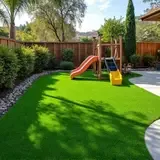
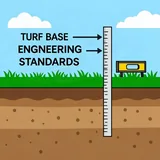
Miami artificial grass is built on the ground described below. Miami is a humid sub-tropical metro: the wet season runs roughly May to October with short heavy afternoon thunderstorms, and the Atlantic hurricane season runs June 1 to November 30 (https://www.weather.gov/mfl/, HTTP 200). On the EPA UV Index scale everything at 8 and above is very high to extreme, and Miami sits in that band for much of the year (https://www.epa.gov/sunsafety/uv-index-scale-0, HTTP 200). For artificial grass that means drainage design in the wet season, wind anchoring in storm season, and a UV-stabilised fibre. Under the grass, The county is mapped on oolitic Miami Limestone, a soft, highly permeable rock that is often within a metre of the surface under a thin layer of sandy fill. The USDA-NRCS Krome series, mapped across Miami-Dade, is a very gravelly loam over limestone that drains very fast (https://soilseries.sc.egov.usda.gov/OSD_Docs/K/Krome.html, HTTP 200). Crews hit rock quickly, so a turf build usually goes up rather than down: a graded, compacted open-graded aggregate base over a geotextile separator, with a positive drainage outlet.
Miami-Dade County · water from Miami-Dade Water and Sewer Department


County covered: Miami-Dade County. Requests route only to local artificial grass installers, and every quote should be itemised before a deposit changes hands.