HOA approval is the step most often skipped on artificial grass projects in Miami-Dade, and it is the one most likely to stop a job after the deposit is paid. Florida law gives an owner real ground, and it also leaves the association room to set appearance rules. Knowing which is which saves an argument.
What Florida law actually says
Chapter 720 of the Florida Statutes governs homeowners associations, and the landscaping provision that matters here is s. 373.185: a deed restriction or covenant may not prohibit a property owner from implementing Florida-friendly landscaping, and a rule that has that effect may not be enforced (https://www.flsenate.gov/Laws/Statutes/2023/373.185, HTTP 200). That is a real limit on a board.
It is also a narrower limit than many owners assume. Artificial grass is not named in the statute, so an association can still adopt reasonable rules on appearance, colour, product quality, location and how much of the lot may be covered, and it can require the surface to be kept neat and free of weeds. The statute stops an outright ban of a listed landscaping practice; it does not pre-approve a specific product.
What a board will usually ask for
- A plot plan showing the area to be covered and the proposed edge treatment.
- The product specification: manufacturer, fibre type, face weight, colour and sample.
- Infill type and the rate per square foot.
- Base and drainage detail, including where water leaves the lot.
- Coverage percentage of the lot, which many associations cap.
- Wind anchoring detail, which some boards now request after storm seasons.
Getting a decision quickly
Submit the package complete, in writing, and ask for the decision in writing too. Incomplete submittals are the usual reason approvals stall, and a board asked to approve "artificial grass" without a product photograph will say no because it cannot picture the result. Where a board refuses, ask which specific rule is being applied and whether the rule was adopted in writing, because an unwritten preference is not a rule.
Condominiums and townhomes are different
In a condominium the landscape is often common element, not owner property, so the conversation starts with the board rather than with the owner. In a townhome community the limited common elements may include the yard, and the declaration decides who controls it. Ask the manager which document governs before spending money on a design.
After approval: keep the file
Keep the written approval with the contract, the product specification and the drainage plan. If the board changes or a neighbour complains two years later, the file is the answer. Keep photographs of the base before the surface was laid as well, because a drainage dispute is decided by what was under the grass.
Where boards commonly draw the line
Three restrictions appear again and again in Miami-Dade communities: a cap on the percentage of the lot that may be synthetic, a rule that the surface must not be visible from the street above a certain sightline, and a requirement that the surface be maintained free of weeds and debris. None of those is a ban, and each can usually be met with a layout change rather than an argument.
Where a board refuses on appearance alone, the productive conversation is about product specification: a higher face weight, a lighter colour, a realistic pile height and a graded installation read differently from a bright, flat green sheet. Boards approve what they can picture.
What to do when the association has no process
Some small associations have no architectural committee and no written application process. In that case ask the board in writing how it wants the request submitted, and get the response in writing. An association that cannot point to a written rule has limited ground to refuse, and a written record of the exchange is what turns a dispute into a decision.
Where the community has a manager, submit through the manager and ask for the declaration sections that govern landscaping. That document, not the board’s recollection, decides who controls the yard and what may be installed.
Frequently asked questions
Can an HOA ban artificial grass outright in Florida?
A blanket ban is difficult to defend, and s. 373.185 bars covenants that stop Florida-friendly landscaping. Artificial grass is not named in that statute, so boards commonly rely on appearance, colour and coverage rules instead of a ban.
What if the board refuses without a reason?
Ask in writing which rule is being applied and for a copy of it. Flood the board with the product specification, a sample and a clear plot plan, then escalate through the association grievance process in the declaration.
Does a permit replace HOA approval?
No, and the reverse is also true. A permit is a government approval; HOA approval is a private covenant matter. Neither substitutes for the other.
Can a board require the owner to remove approved grass later?
A board can require a surface to be maintained and can act on a health or safety problem. Retroactively reversing a written approval is a covenant question answered by the declaration, which is why the written approval matters.
How long should approval take?
Most boards answer within one to two meetings. Submit a complete package, follow up in writing, and keep the response with the contract.
Sources
- National Weather Service Miami-South Florida - wet season and hurricane season
- Florida Statutes s. 373.185 - Florida-friendly landscaping and association rules
- Sunshine 811 - Florida one-call notice before digging
- InstallArtificial - artificial grass prices in Miami
- Monster Grass South Florida - cost to install turf in Miami
- Synthetic Grass Warehouse Florida - Miami artificial grass cost page
Related
Artificial Grass services in Miami
Miami Artificial Grass Residential Grass
A residential artificial grass installation in Miami is a drainage and sub-base project that happens to end with grass on top. The lawn is the last two days of the job; the base is everything else.

Miami Artificial Grass Pet Grass
A pet yard is a plumbing problem with grass on top. Two dogs in a Miami wet season produce far more urine than a thin base can carry away, and the smell people blame on the grass is ammonia from a base that holds water.
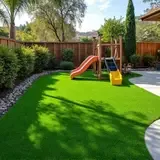
Miami Artificial Grass Playground Grass
A playground surface is specified by what happens when a child falls on it. The grass is the top layer of a safety system, and the layer under it, the shock pad, is the part a cheap quote leaves out.
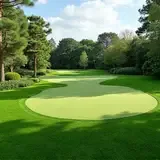
Miami Artificial Grass Putting Greens
A putting green is the most precisely built surface in this trade. The ball tells the truth about the base, and a green laid over an uneven pad will not roll true no matter what the turf costs.
Miami Artificial Grass Commercial Grass
Commercial work is judged on documents as much as on the surface. A property manager needs a specification, a drainage plan, a wind detail and a warranty schedule that survives an insurance review, not a square-foot price.
Areas we serve
Miami
Artificial Grass in Miami, FL - costs, water and soil notes.
Miami Beach
Artificial Grass in Miami Beach, FL - costs, water and soil notes.
Coral Gables
Artificial Grass in Coral Gables, FL - costs, water and soil notes.
Kendall
Artificial Grass in Kendall, FL - costs, water and soil notes.
Hialeah
Artificial Grass in Hialeah, FL - costs, water and soil notes.
Doral
Artificial Grass in Doral, FL - costs, water and soil notes.
Aventura
Artificial Grass in Aventura, FL - costs, water and soil notes.